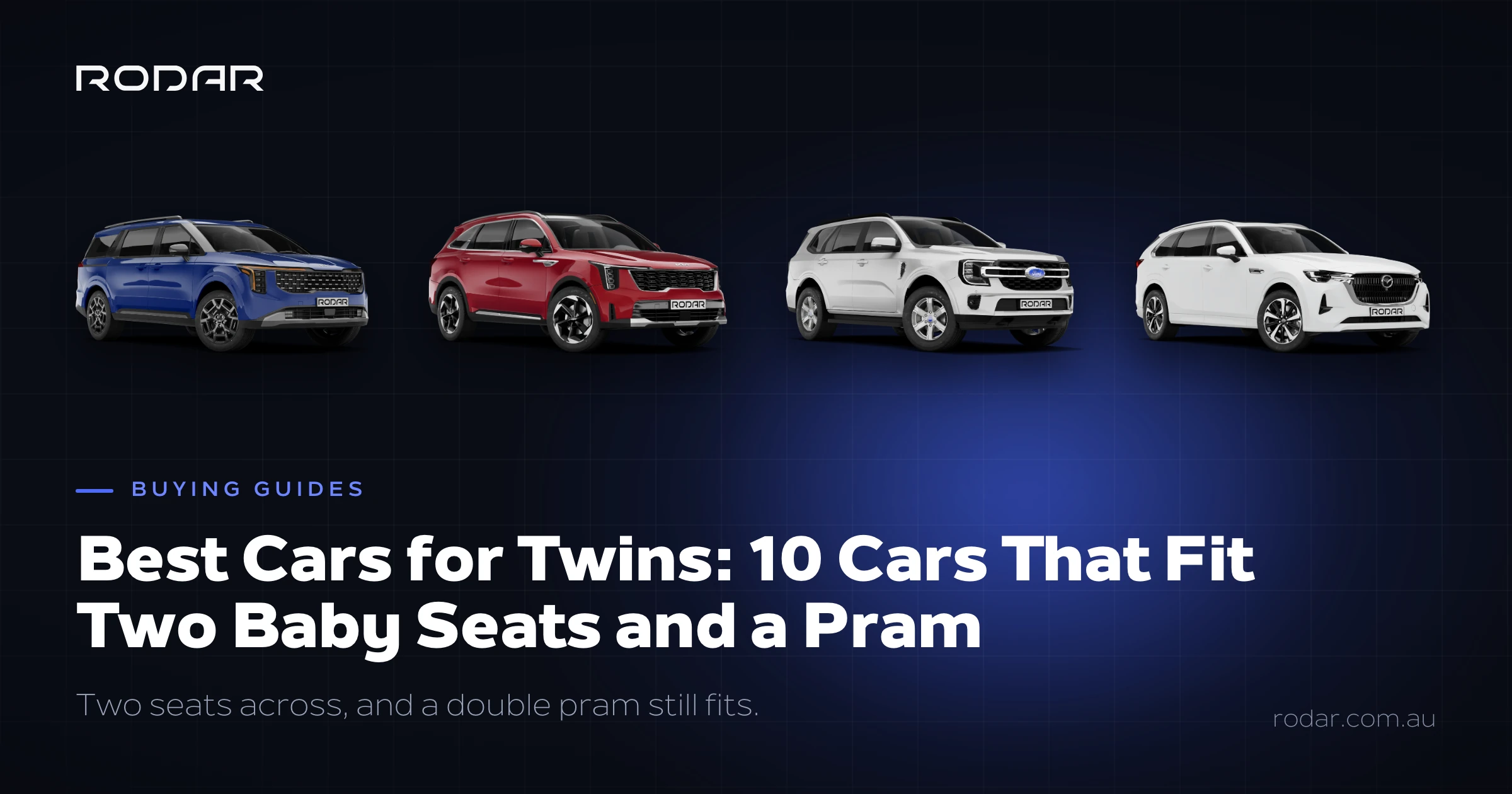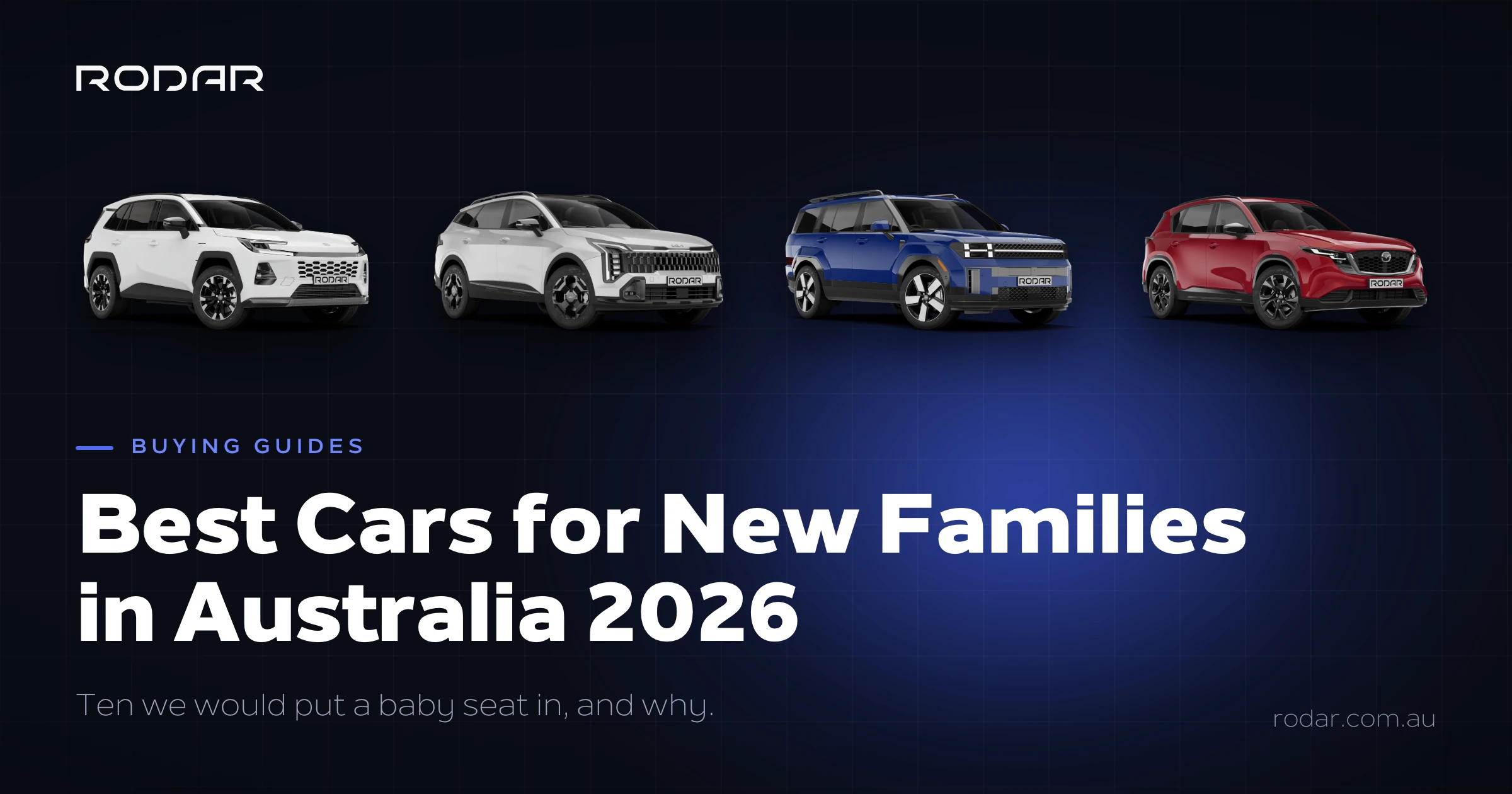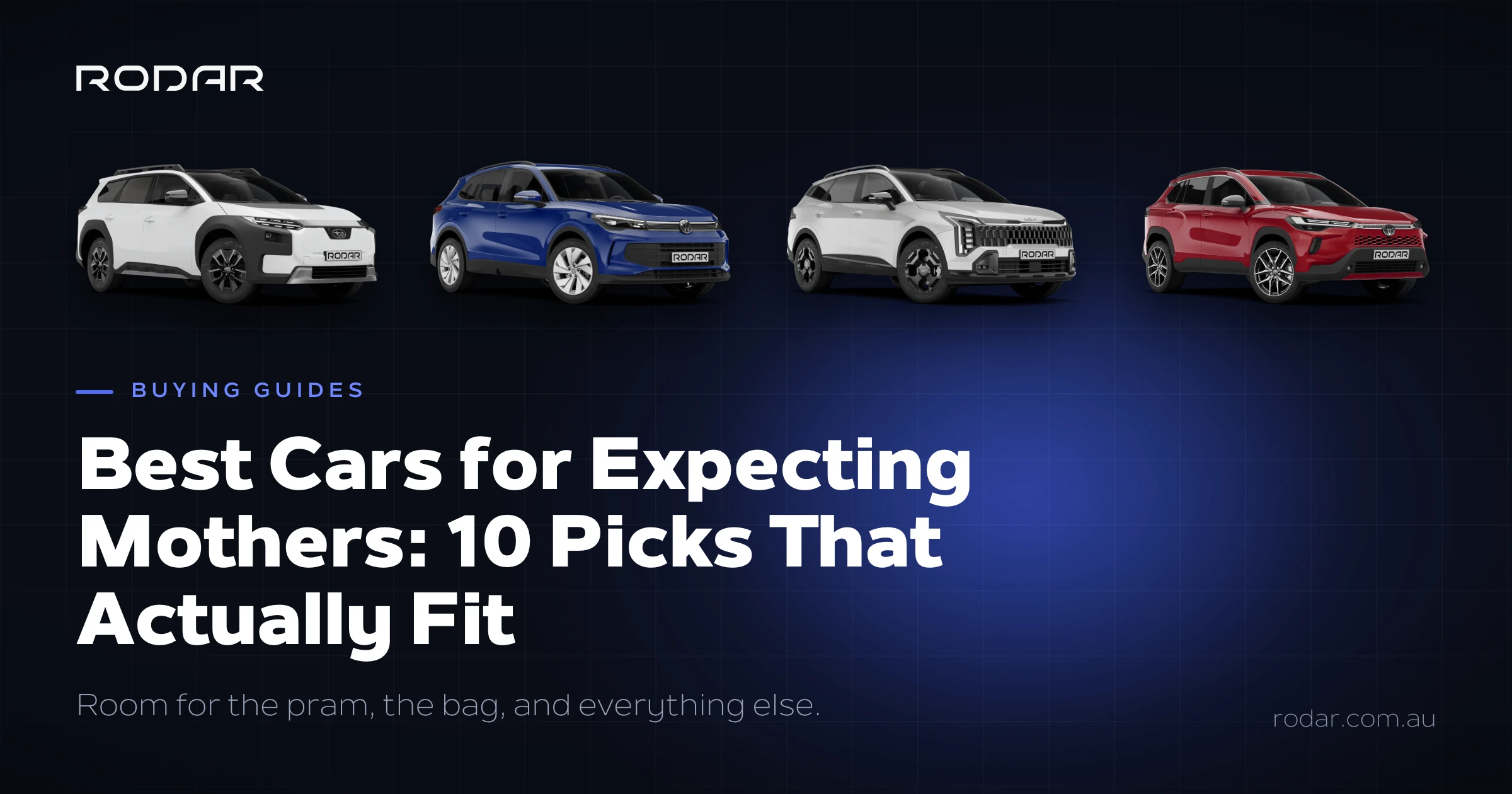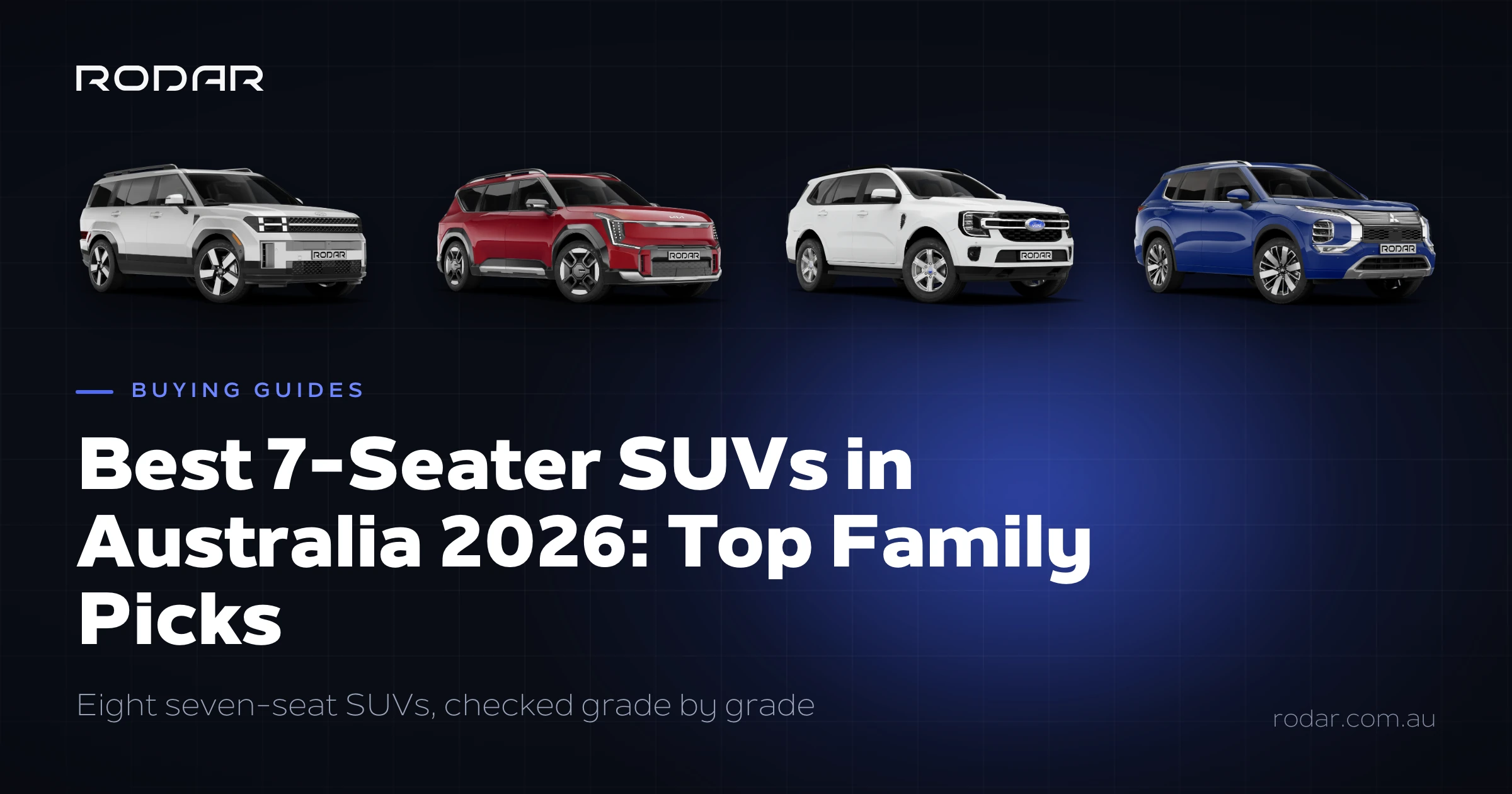
When the family outgrows a five-seater, the search for a seven-seat SUV starts fast. Grandparents visit, a third child arrives, or the school run starts to include a friend or two. Suddenly the back row matters.
The good news is there are plenty of genuine seven-seaters in 2026, across petrol, diesel, hybrid and electric. The catch is that seat counts often change from one grade to the next, so the version you are quoted needs checking. Below are eight we would shortlist, with the grades that carry seven seats spelled out. When you have picked one, Rodar can take your exact spec to our network of over 1,000 trusted automotive dealers and manufacturers and bring the offers back to you.
What to look for in a seven-seater
The third row makes or breaks a seven-seat SUV. Some suit children on short trips. Others take adults in comfort. Before you compare prices, think about:
- Third-row room: adults, or children only?
- Boot space: with all seven seats in use, not with the third row folded.
- Drivetrain: petrol, diesel, hybrid or electric.
- Running costs: fuel, tyres and servicing over the years you will own it.
The best 7-seater SUVs in Australia for 2026
In no particular order. The right one depends on how often all seven seats are full and how far you drive.
Hyundai Santa Fe
The Hyundai Santa Fe is one of the strongest all-rounders in the class. Seven seats are standard, and the top Calligraphy grade offers a six-seat layout with second-row captain's chairs as an option.
%20(BRN)&paintId=pspc0093&angle=1&zoomType=fullscreen&zoomLevel=30&width=800&fileType=webp&bodyType=suv&bodySize=4)
- A choice of 2.5-litre turbo petrol or 1.6-litre turbo hybrid, in front or all-wheel drive.
- Hyundai's warranty is 7 years, unlimited kilometres, when scheduled servicing is done on time in Hyundai's network.
Kia Sorento
The Kia Sorento has three rows on every variant, which makes it one of the simplest seven-seaters to buy.

- Diesel, hybrid and plug-in hybrid. The V6 petrol has been discontinued.
- Kia's warranty is 7 years, unlimited kilometres, for private buyers.
Toyota Kluger
The Toyota Kluger is a seven-seater for families who want a hybrid without thinking about it. It is sold as a hybrid only in Australia, with all-wheel drive on every grade.

- Grades are GX, GXL and Grande.
- Toyota's warranty is 5 years, unlimited kilometres, with engine and driveline cover extending to 7 years when serviced on schedule.
Hyundai Palisade
If you regularly fill every seat, the Hyundai Palisade is the one to look at, with room for up to eight. It is sold as a 2.5-litre turbo hybrid only.

- The Elite grade seats eight.
- The Calligraphy grade comes with seven or eight seats, so say which you want when you ask for a price.
Mitsubishi Outlander
The Mitsubishi Outlander is a strong value pick, but the seat count depends heavily on the grade.
&paintId=pspc0004&angle=1&zoomType=fullscreen&zoomLevel=30&width=800&fileType=webp&bodyType=suv&bodySize=4)
- Petrol: the LS, LS Black Edition and Aspire grades are seven-seat only. The ES is available with five or seven. The Exceed and Exceed Tourer are five-seaters.
- Plug-in hybrid: only the Aspire grade has seven seats. The ES, Exceed and Exceed Tourer PHEVs are five-seaters. The PHEV has an 84 km electric range (WLTP).
- With the third row up, the seven-seat petrol Outlander has 163 litres of boot space. It suits children in the back row more than luggage.
Ford Everest
The Ford Everest suits families who tow a van or head off the bitumen. Every Everest is four-wheel drive and rated to tow 3,500 kg braked.
&paintId=pspc0132sspc0004&angle=1&zoomType=fullscreen&zoomLevel=30&width=800&fileType=webp&bodyType=suv&bodySize=4)
- Seven seats are optional on the entry Active grade and standard on the grades above it.
- Engines are a 2.0-litre turbo-diesel four-cylinder or a 3.0-litre turbo-diesel V6.
Isuzu MU-X
The Isuzu MU-X is the straightforward diesel choice. Seven seats and 3,500 kg braked towing are standard across the range.
&paintId=pspc0093&angle=1&zoomType=fullscreen&zoomLevel=30&width=800&fileType=webp&bodyType=suv&bodySize=4)
- A 2.2-litre or 3.0-litre turbo-diesel, in rear-wheel drive or 4x4.
- A practical match for families who tow and want a simpler, work-ready SUV.
Kia EV9
The Kia EV9 is the seven-seat electric pick. It has seven seats on the Air, Earth and GT-Line grades, and six on the GT.

- Home charging makes the most sense with a large battery like this one.
- It carries Kia's 7 year, unlimited kilometre warranty for private buyers.
The third row test
Brochures call almost anything with three rows a seven-seater. In practice the segment splits into two kinds of car, and knowing which you are buying saves a costly surprise.
Occasional-use third rows suit children on shorter trips. Headroom and knee room are tight for adults, and getting in usually means sliding and tilting a second-row seat. Most mid-size SUVs sit here.
Full-time third rows take adults without complaint and often have their own air vents. These are larger vehicles, with a price and footprint to match.
When you inspect one, put the driver's seat where you actually drive, then sit in the third row yourself. If your knees touch the seat in front or your head touches the roof, it is an occasional-use row, whatever the brochure says.
If children in car seats will ride in the third row, check that it has top tether anchorages. Not every third row does. Then check that a child seat in the second row still lets someone climb past it to the back.
Boot space with all seven seats up
Quoted boot figures are usually measured with the third row folded, which is not how you will use the car. With all three rows in use, many mid-size seven-seaters leave room for a few shopping bags and little else. Larger SUVs keep more usable space.
If you regularly carry seven people plus luggage, let this measurement drive your shortlist more than styling or badge. Check at the same time where the spare wheel lives, and whether the third row folds completely flat.
Petrol, diesel, hybrid or electric
- Petrol is simplest and least expensive to buy. In a heavy seven-seater doing city kilometres, it is also the thirstiest.
- Diesel still makes sense if you tow or cover long highway distances.
- Hybrid suits most families, especially in stop-start driving, where the fuel saving is largest.
- Electric works well if you can charge at home and your usual trips fit the range.
Safety with a full car
Check the ANCAP rating and the year it was awarded. Testing criteria have tightened over time, so an older five-star result is not the same as a recent one.
Beyond the stars, look for rear cross-traffic alert, blind-spot monitoring, a rear-seat reminder and a centre airbag between the front seats. Confirm that the curtain airbags reach the third row, as they do not on every model.
Seven-seater or people mover?
If you carry seven people most days, a people mover often gives more space and easier access. A seven-seat SUV is the better all-rounder when the third row is for some trips, and you want the ride height and all-wheel drive options of an SUV.
How Rodar helps you buy a seven-seater
Once you have a shortlist, the next job is a fair price on the exact grade and seat layout you need. That is where the time usually goes, because each dealer has one allocation and one number to give you.
We do it the other way round. Tell us the make, model, grade, colour and seat count you want. We put it to our network of over 1,000 trusted automotive dealers and manufacturers, and their drive-away offers come back side by side. You pick the one you want. We can also sort finance across a panel of over 30 lenders, value your trade-in and arrange delivery to your door. The dealer who wins your business pays us a procurement fee, built into the deal, so the price we quote is the price you pay.
If the car is in stock and your finance is sorted, it can be 24 to 48 hours. Most of the time it is one week onwards, depending on the model and what is available across the network.
Choosing a bigger car for a growing family is a big decision, and you do not have to work it out alone. Tell us who needs to fit, and we will check the grades for you.
Whenever you are ready, get your competitive offers, or read our FAQs first if you would like to see how it works. No pressure either way.
Rates and repayments are indicative only and subject to lender approval. Rodar Pty Ltd is an Authorised Credit Representative (555548) of Fintelligence Pty Ltd (ACL 511803).
Skip the dealership haggle
Once you've picked a model, Rodar does the sourcing, comparison and negotiation for you — so you get the right car at the right price.
Build your car now