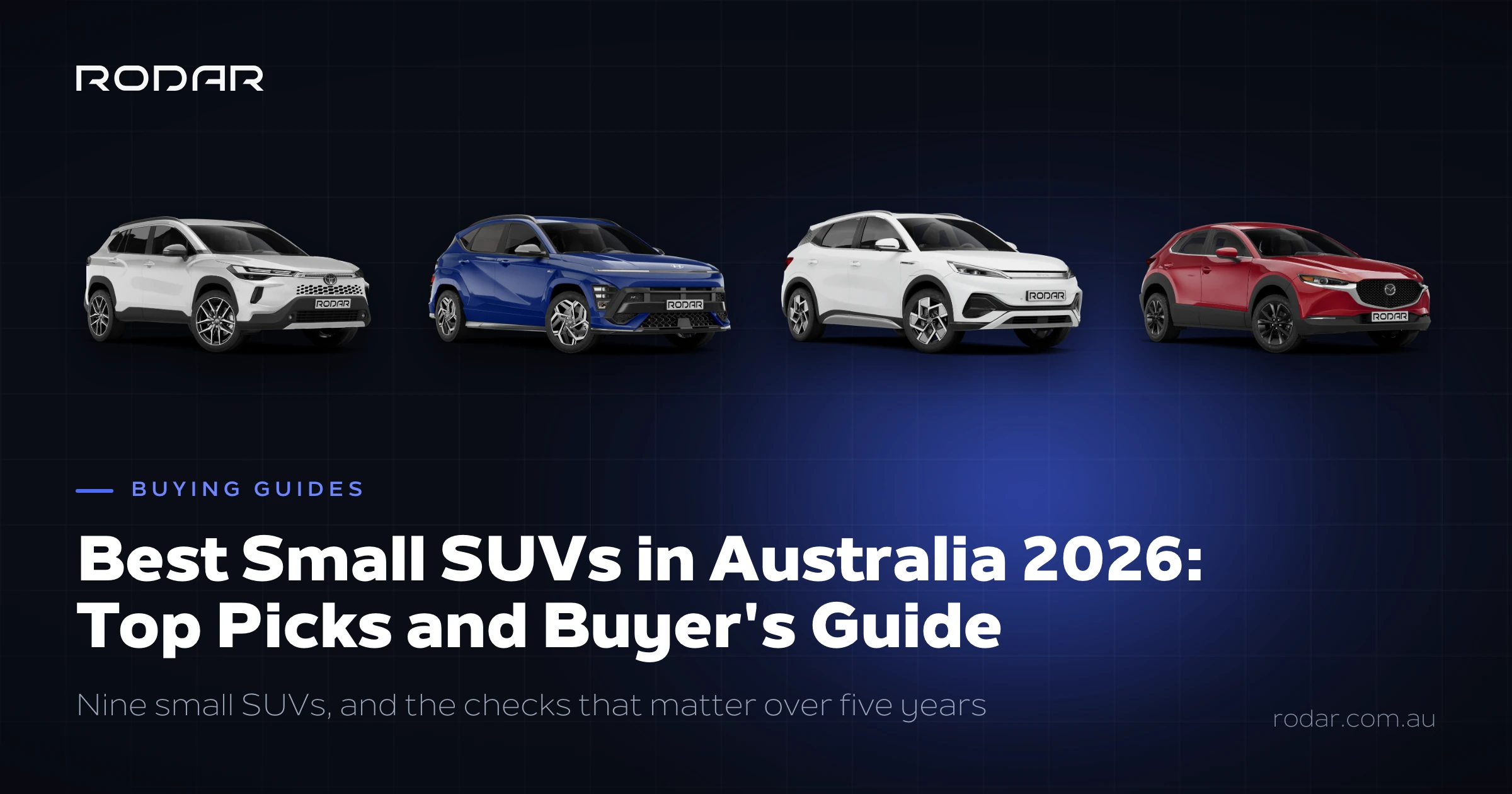
A small SUV is easy to love. It parks like a hatch, sits a little higher in traffic and still takes a pram, a dog or a weekend away. It is no surprise so many Australians are choosing one.
That popularity also means a crowded field, and it can be hard to know where to start. You do not need to test drive every one of them. Below are nine worth shortlisting, what each does best, and the checks that matter more than the badge. When you have narrowed it down, Rodar can take your exact spec to our network of over 1,000 trusted automotive dealers and manufacturers and bring the offers back to you.
What counts as a small SUV?
Small SUVs sit between a light hatch and a mid-size SUV. Expect compact dimensions, a raised ride height and a boot big enough for everyday family life. Most are front-wheel drive, with petrol, hybrid and electric versions across the class.
The best-selling small SUVs so far in 2026
These were the five best-selling small SUVs in the first half of 2026, from VFACTS figures.
| Model | Sales, January to June 2026 |
|---|---|
| Chery Tiggo 4 | 13,638 |
| Hyundai Kona | 13,132 |
| GWM Haval Jolion | 11,480 |
| MG ZS | 8,984 |
| Toyota Corolla Cross | 6,867 |
For every segment and the top sellers overall, see our full list of Australia's best-selling new cars in 2026.
The best small SUVs in Australia for 2026
In no particular order. The right one depends on how you drive and what you carry.
Best all-rounder: Toyota Corolla Cross
The Toyota Corolla Cross is the sensible, easy choice for most buyers. It is sold as a hybrid only in Australia, so the fuel saving comes as standard.

Toyota's warranty is 5 years, unlimited kilometres, with engine and driveline cover extending to 7 years when serviced on schedule.
Widest choice: Hyundai Kona
The Hyundai Kona comes as petrol, hybrid and electric, so you can pick the drivetrain first and the car second.

Hyundai's warranty is 7 years, unlimited kilometres, when scheduled servicing is done on time in Hyundai's network.
Best seller: Chery Tiggo 4
The Chery Tiggo 4 was the best-selling small SUV of the first half of 2026. It comes with a turbo petrol or a hybrid, and seats five.

Chery's warranty is 7 years, wherever the car is serviced.
Best value: MG ZS
The MG ZS is a strong starting point if price leads your search. It comes with a 1.5-litre turbo petrol, or as the ZS Hybrid+ in Excite and Essence grades.

MG offers a 10 year warranty, with conditions.
Best hybrid for the money: GWM Haval Jolion
The GWM Haval Jolion is available as a hybrid and focuses on equipment for the money.

GWM's warranty is 7 years, wherever the car is serviced.
Best electric: BYD Atto 3 and BYD Atto 2
The BYD Atto 3 is a roomy electric small SUV, and the BYD Atto 2 is a smaller electric option that went on sale in December 2025.


With BYD, the saving we can find comes through a novated lease. Under current rules, eligible battery electric cars under the fuel-efficient luxury car tax threshold are exempt from fringe benefits tax on a novated lease until 31 March 2027. Changes from 1 April 2027 were announced in the May 2026 Budget and are subject to legislation. Our novated lease guide explains how it works.
This is general information, not tax advice. Get advice for your own situation before you commit.
Best to drive: Mazda CX-30 and Volkswagen T-ROC
If you enjoy driving, the Mazda CX-30 and the Volkswagen T-ROC bring a more premium feel than most in the class.
&paintId=pspc0041sspc0146&angle=1&zoomType=fullscreen&zoomLevel=30&width=800&fileType=webp&bodyType=suv&bodySize=4)

The CX-30 comes with a 2.0-litre or 2.5-litre petrol engine. There is no full hybrid version.
How the main contenders compare
| Model | Drivetrains | Best for |
|---|---|---|
| Toyota Corolla Cross | Hybrid | An easy all-rounder |
| Hyundai Kona | Petrol, hybrid, electric | Widest choice of drivetrain |
| Chery Tiggo 4 | Petrol, hybrid | A popular all-rounder |
| MG ZS | Petrol, hybrid | Buyers led by price |
| GWM Haval Jolion | Petrol, hybrid | Equipment for the money |
| BYD Atto 2 and Atto 3 | Electric | Going electric on a novated lease |
| Mazda CX-30 | Petrol | Interior quality and driving feel |
Petrol, hybrid or electric?
If you do lots of short, stop-start city driving, a hybrid usually pays off in fuel savings. If you can charge at home and your driving fits the range, an electric car can cost less again to run. If you drive low kilometres or want the lowest upfront price, a petrol small SUV can make the most sense.
How much should you spend?
Moving from a base grade to a mid grade usually adds the things you notice every day: better infotainment, climate control, upgraded seats and often more driver-assist features. That is usually money well spent.
Moving from mid to top grade often adds a sunroof, bigger wheels, leather and premium audio. Enjoyable, but bigger wheels mean dearer tyres and often a firmer ride. The best reason to move up is safety equipment. If blind-spot monitoring or adaptive cruise control only come on higher grades, that is a real consideration.
Boot space and everyday practicality
Small SUV boots vary far more than their outside size suggests. Some trade cargo space for rear legroom, others do the reverse. Brands also measure boot space in different ways, so spec sheet figures do not line up neatly.
The practical test is simple. Take whatever you carry most, such as a pram, golf clubs or a dog crate, and put it in the boot before you buy. Check whether there is a spare wheel or just a repair kit.
If you are fitting child seats, check rear door openings and anchor points. A car that looks fine in the showroom can be awkward every morning.
Safety beyond the star rating
Many small SUVs carry a five-star ANCAP rating, so look at the year it was awarded too. Testing criteria have tightened over time, and a five-star result from several years ago was earned against an easier standard.
Then look at what is standard on the grade you are buying. Blind-spot monitoring, rear cross-traffic alert, adaptive cruise control and a centre airbag are often reserved for higher grades.
Running costs over five years
Purchase price is the number everyone compares, but it is rarely the biggest difference over the years you own the car. Compare these instead:
- Fuel or energy. A hybrid saves most in city driving. Over 15,000 km a year, the difference adds up.
- Servicing. Capped-price schedules vary. Compare the five-year total, not the first service.
- Tyres. A model on 18 or 19-inch wheels can cost more per set than one on 17s.
- Insurance. Get a quote before you buy. Premiums can differ between models in the same segment.
How Rodar helps you buy a small SUV
With this many small SUVs on sale, the price you are offered can vary a lot from one dealer to the next. Finding the best one yourself means a lot of phone calls and showroom visits.
We do that work for you. Tell us the make, model, grade and colour you want. We put it to our network of over 1,000 trusted automotive dealers and manufacturers, and their drive-away offers come back side by side. You pick the one you want. For BYD, we arrange the saving through a novated lease. We can also sort finance across a panel of over 30 lenders, value your trade-in and arrange delivery to your door. The dealer who wins your business pays us a procurement fee, built into the deal, so the price we quote is the price you pay.
If the car is in stock and your finance is sorted, it can be 24 to 48 hours. Most of the time it is one week onwards, depending on the model and what is available across the network.
Whichever small SUV you land on, you do not have to chase the price on your own. Tell us what you need it to do, and we will take it from there.
Whenever you are ready, get your competitive offers, or read our FAQs first if you would like to see how it works. No pressure either way.
Rates and repayments are indicative only and subject to lender approval. Rodar Pty Ltd is an Authorised Credit Representative (555548) of Fintelligence Pty Ltd (ACL 511803).
Skip the dealership haggle
Once you've picked a model, Rodar does the sourcing, comparison and negotiation for you — so you get the right car at the right price.
Build your car now