We'll connect you with our wholesale network to get the best price for your car
Hybrid cars have gone from niche to mainstream in Australia. In early 2026, hybrids accounted for roughly 29.5% of new-car sales — nearly double the share of fully electric vehicles. [VERIFY figure] For buyers who want lower fuel bills without the charging worries of an EV, a hybrid is now the obvious middle ground.
This guide covers the best hybrid cars in Australia for 2026, what to look for, and how much you can expect to save at the pump. If you'd rather skip the dealership haggling altogether, Rodar can source and negotiate any of these models for you.
"Hybrid" covers three different technologies, and the right one depends on how you drive:
For most Australian buyers, a self-charging standard hybrid is the simplest place to start.
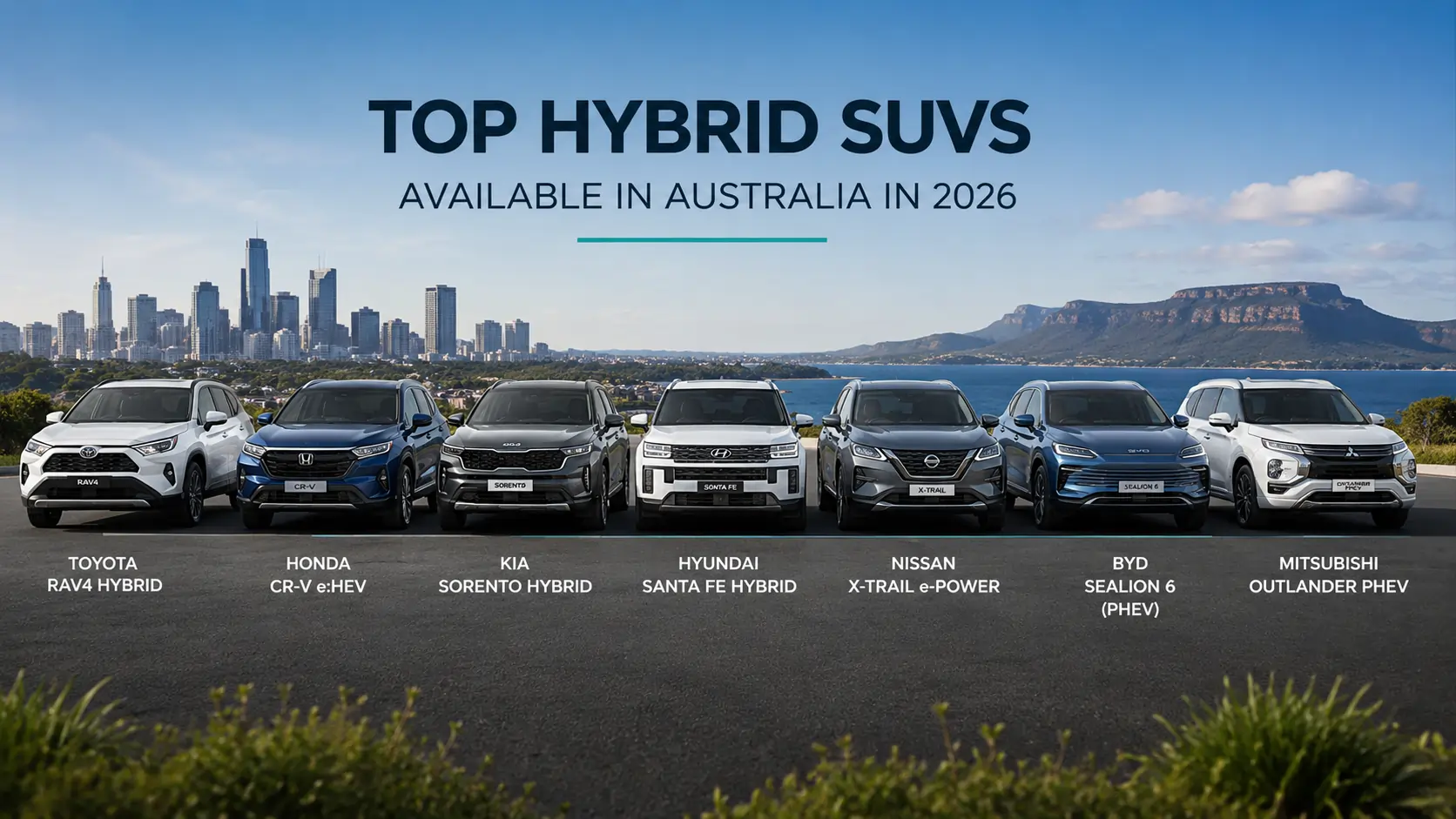
The RAV4 Hybrid remains the benchmark and one of Australia's best-selling vehicles. The latest generation pairs a 2.5-litre engine with Toyota's hybrid system for a claimed 4.8L/100km on regular 91-octane petrol. [VERIFY spec & current drive-away price] Reliable, efficient, and strong on resale.
Honda's e:HEV system delivers smooth, quiet power and a premium cabin feel, making the CR-V a standout family hybrid SUV. [VERIFY price & fuel figure]
A seven-seat hybrid SUV with genuine space for growing families, backed by Kia's long warranty. [VERIFY warranty terms & price]
Bold styling, a roomy interior and a comfortable ride make the Santa Fe Hybrid a compelling large-SUV pick.
Nissan's e-Power drives the wheels with an electric motor at all times (the petrol engine only generates electricity), giving an EV-like feel without ever needing to charge.
The Sealion 6 plug-in hybrid shows how fast new brands are closing the gap, offering strong specs at a sharp price. [VERIFY EV range & price]
The updated 2026 Outlander PHEV adds a larger 22.7kWh battery for a claimed 86 km of electric-only range — enough to cover many daily commutes on electricity alone. [VERIFY range & price]
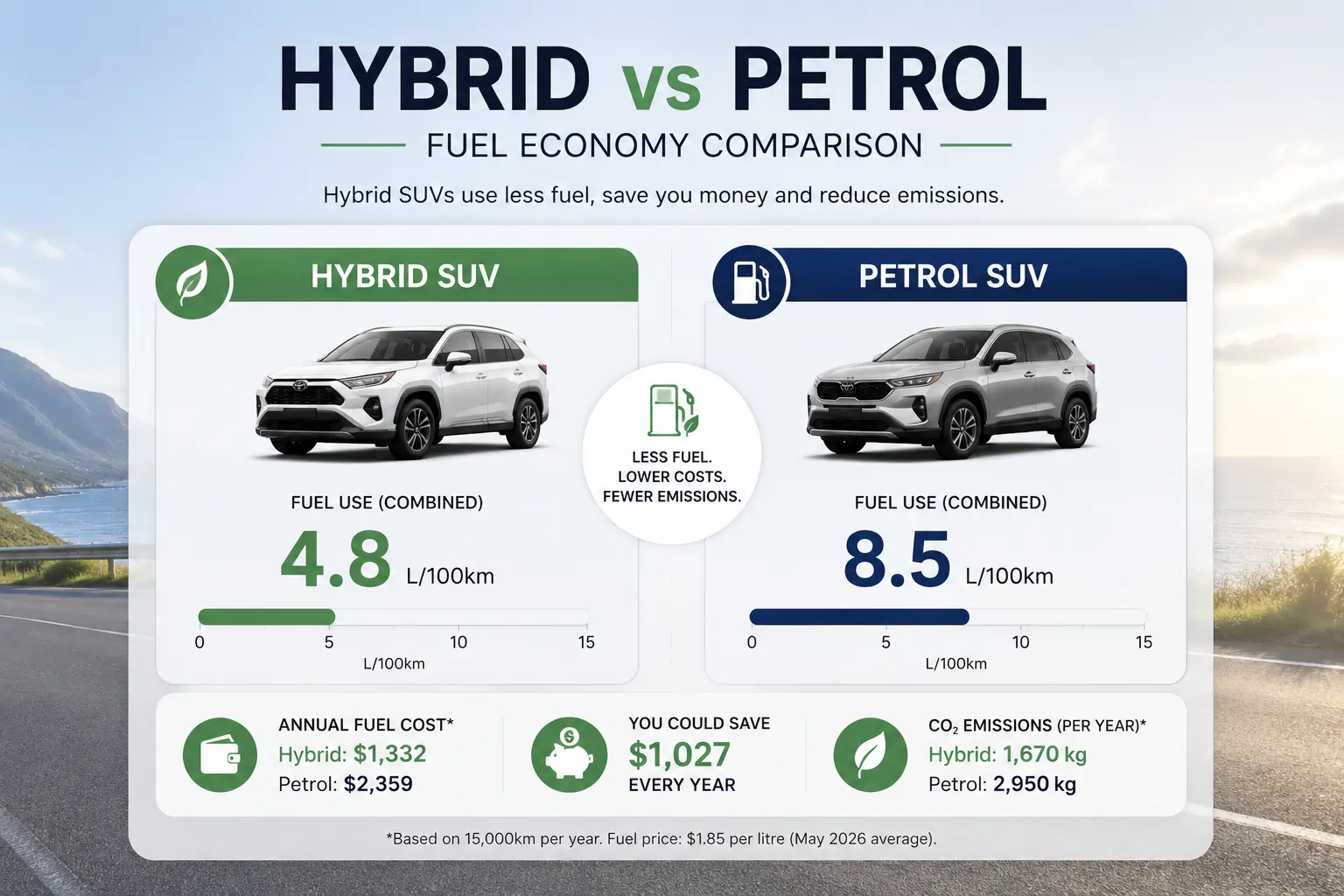
A typical petrol SUV uses around 8–9L/100km, while a comparable hybrid often returns 4.5–5L/100km. Over 15,000 km a year, that difference can mean hundreds of dollars saved annually, depending on fuel prices. [VERIFY — adjust to current AU fuel prices] The savings are largest in stop-start city driving, where hybrids run on electricity most often.
Choose a hybrid if you do a mix of city and country driving, don't have easy charging access, or want lower running costs with zero range anxiety. Choose an EV if you can charge at home and mostly drive shorter, predictable distances. For a deeper comparison, see our guide to electric vehicles in Australia.
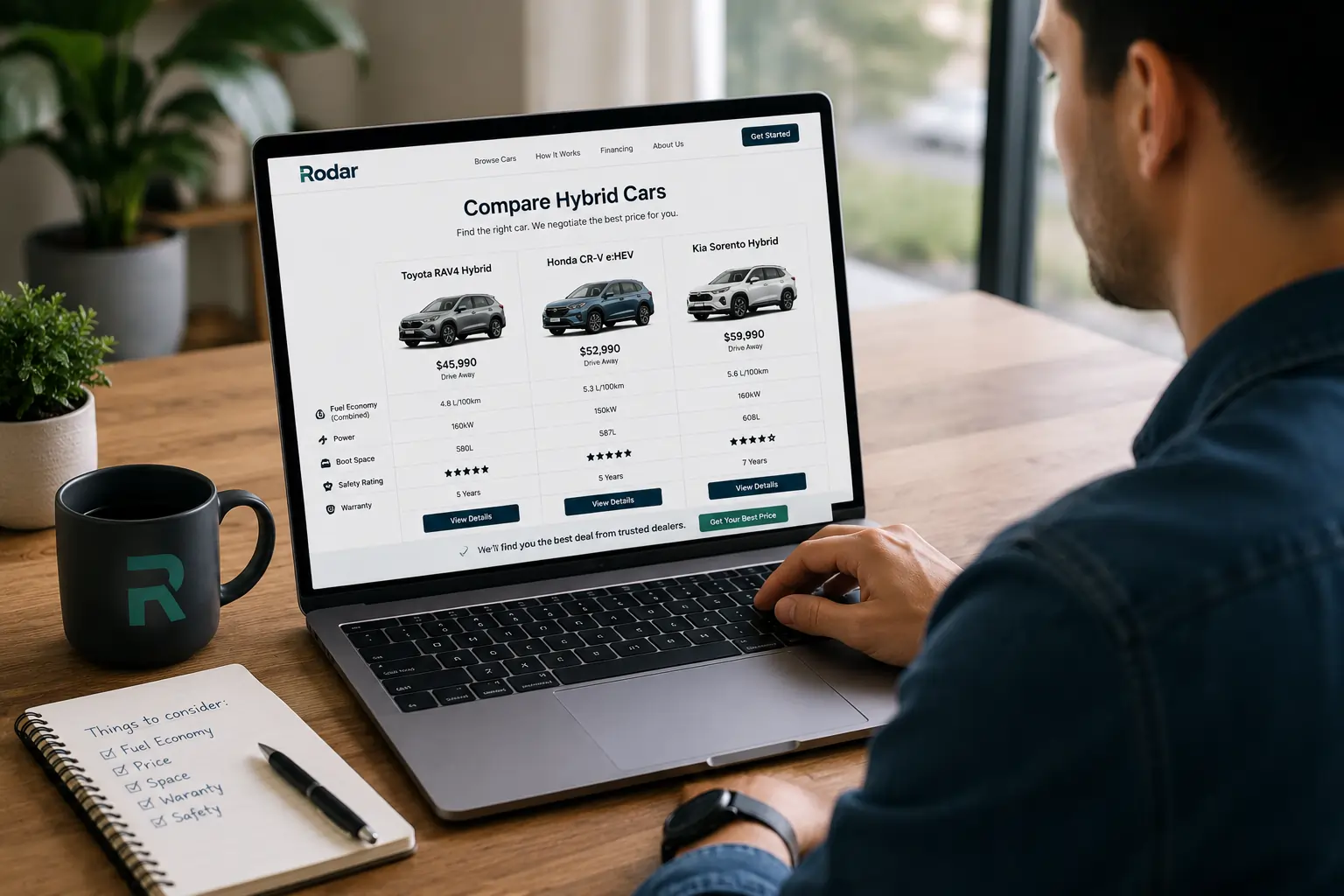
Once you've picked a model, the hard part is usually getting a fair price. Rodar's car-buying service does the sourcing, comparison and negotiation for you — so you get the right hybrid at the right price without the dealership pressure.
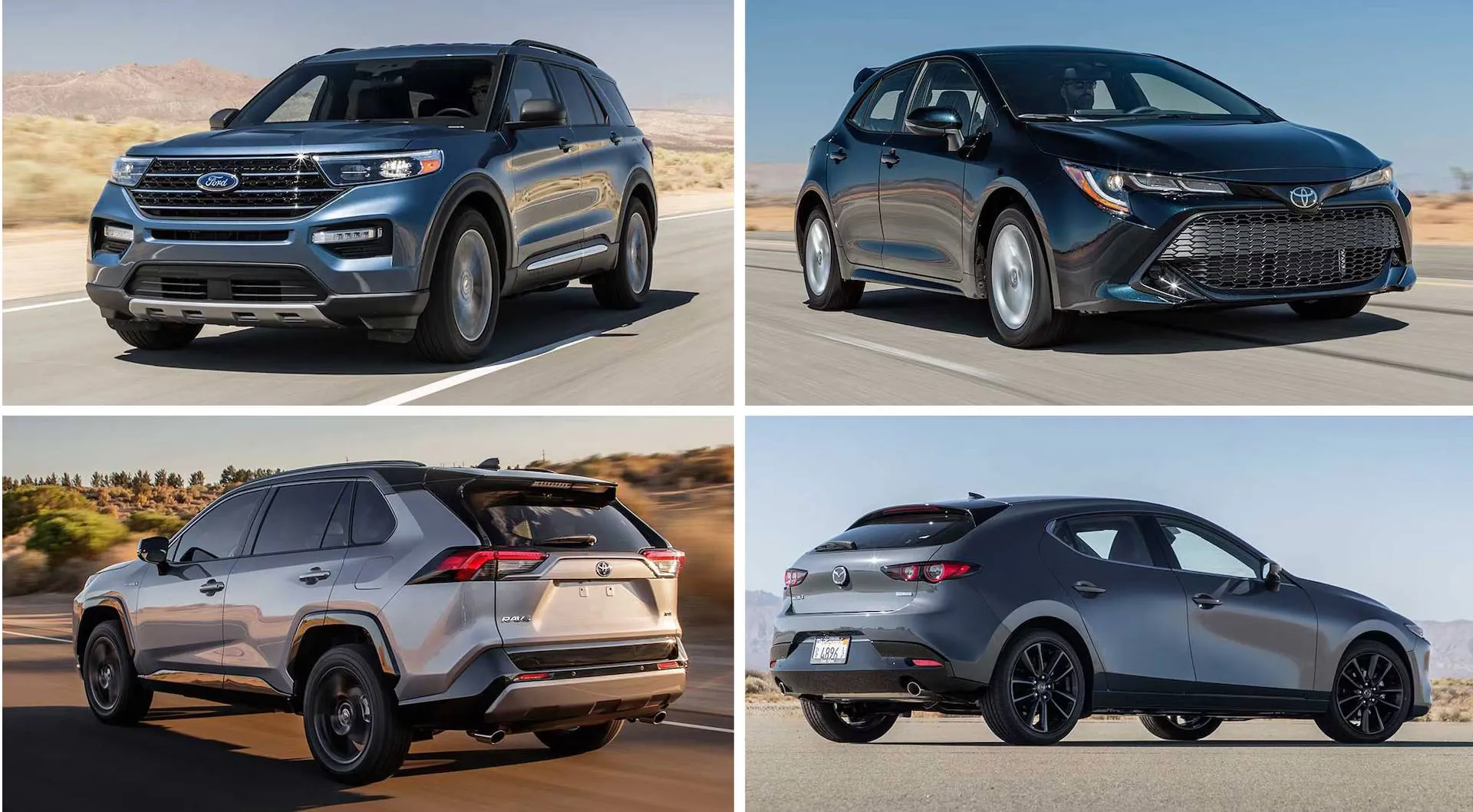
After analyzing thousands of customer reviews and conducting extensive road testing, our automotive experts have compiled the definitive guide to
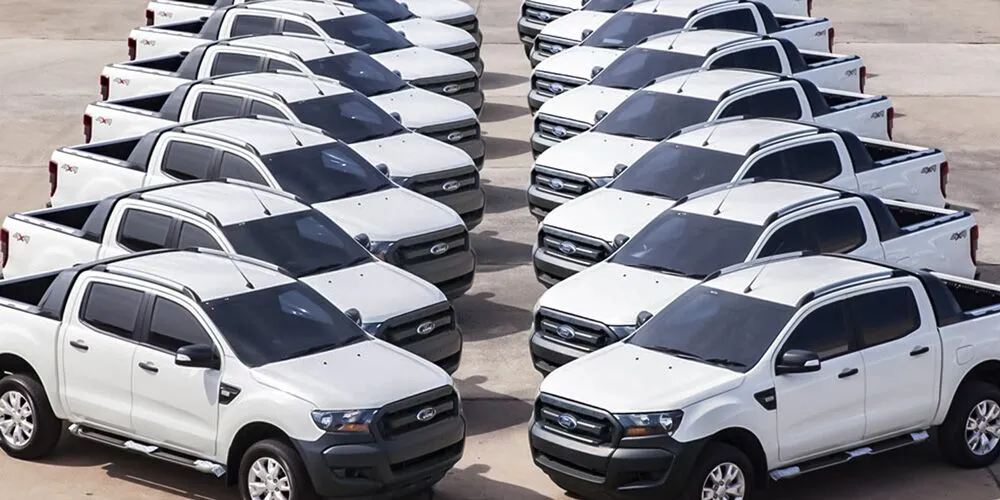
Australian businesses face complex decisions when financing company vehicles. Understanding available fleet car financing options for Australian businesses proves essential

Novated leasing stands out as one of the most tax-effective methods to finance a new vehicle in Australia. This comprehensive
